
Page contents
 At a glance
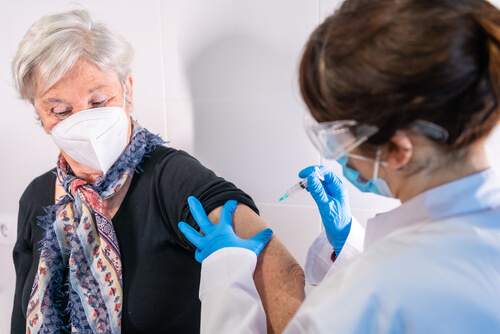
- Targeted eligibility: The Autumn 2025 Covid booster is limited to fewer high-risk groups than in previous years: residents in care homes for older adults, people aged 75 and over, and immunosuppressed people aged 6 months or older.
- Streamlined delivery: Care home residents do not need to book an appointment; mobile NHS vaccination teams will visit the homes directly to administer the jabs.
- Updated protection: Eligible individuals receive updated Pfizer or Moderna vaccines tailored to protect against Omicron variants, which significantly reduce the risk of severe illness and hospitalisation.
- Staff exclusions: Care home staff are no longer eligible for the free NHS Covid booster under the 2025 criteria.
Covid-19 Autumn booster 2025: What you need to know
Covid-19 continues to make some people seriously ill. Between November 2024 and January 2025, around 13,000 people were admitted to hospital with the virus.
The NHS offers a free Covid-19 vaccine for people most at risk of severe illness. This is known as the Autumn booster. In 2025, it is being offered to fewer groups than in 2024.
The UK Health Security Agency (UKHSA) reports that people who had last autumn’s booster were 43% less likely to be admitted to hospital with Covid-19 two weeks after vaccination, compared to those who were not vaccinated.
Who can get a Covid booster in Autumn 2025
You are eligible for the booster if you are:
- 75 years or older
- A resident in a care home for older adults
- Immunosuppressed, aged 6 months or older
Eligibility criteria is the same in England, Scotland, Wales, and Northern Ireland.
You can get the booster even if you’ve never been vaccinated before.
You can check if you meet the criteria for being immunosuppressed on the NHS website.
Care home staff are no longer eligible for the Covid booster vaccine.
Download your free care home funding guide
When and how to get the vaccine
If you are eligible for the autumn vaccine, you should have received your invite to book your appointment.
For care home residents, this will generally be arranged through the care home.
An NHS vaccination team will visit the care home to administer the vaccine. Residents and their families do not need to book an appointment.
Supporting someone with dementia to have the vaccine
Although care home residents are placed as a high priority for the autumn booster, encouraging a loved one with dementia to have the vaccine can be a challenge. They may be confused about why they need it, or have behaviours that make administering a vaccination difficult.
In spite of these challenges, supporting your loved one to have the vaccine is really important to give them the best defence against Covid during the autumn and winter season.
Which vaccine will you get?
Eligible people will receive a vaccine from Pfizer or Moderna.
These updated vaccines provide better protection against Omicron variants.
All versions of the Covid vaccine help reduce the risk of serious illness, so it is recommended to take up the offer if eligible.
Possible side effects
Common side effects include:
- Pain or tenderness in the arm where you had the injection
- Fatigue
- Headache
- General aches or mild flu-like symptoms
These usually last less than a week. Paracetamol can help manage discomfort.
If your symptoms worsen or you are worried, call NHS 111.






Covid booster and Flu vaccine
If you are eligible for the flu jab, you may be able to get it at the same time as your Covid booster.
If you prefer, you can have them on different days.
Help and support
Who is eligible for a flu vaccine
Find a pharmacy that offers the NHS flu vaccine
Next steps
- Confirm care home logistics: Check with your relative’s care home management to verify when the visiting NHS vaccination team is scheduled to administer the booster.
- Coordinate dual vaccination: Inquire whether your loved one can receive their seasonal flu jab during the same visit as their Covid booster for convenience.
- Plan tailored support for dementia: If your relative lives with dementia, prepare simple, reassuring explanations and tell care staff about any specific calm techniques or behaviours that will make the vaccination process easier for them.
FAQs
Will the booster stop me from getting Covid-19?
Whilst the booster won’t completely eliminate your chances of contracting the virus, it will reduce the chance of you becoming severely unwell from Covid-19.
What are the side effects of the booster jab?
Common side effects of the vaccine include a sore or heavy arm at the site of injection, feeling tired, headaches and mild flu-like symptoms. If you do experience any of these symptoms, they should pass after a few days. In a very small number of cases there are serious side effects such as chest pain and shortness of breath. If you experience any of these you should seek urgent medical attention. You may be advised against the booster if you experienced serious side effects after a previous dose of the vaccination.
What if I’ve not had the previous vaccinations?
If you haven’t had either of your first two doses of the vaccine (or a third dose for those with a weakened immune system) you will be offered a single vaccine dose instead of the booster; the criteria for this is the same.