When it comes to adult social care training, this care skills training guide explains the mandatory training care home staff must receive and how the right care home training leads to safe, effective care.
Page contents
At a glance
- Care home staff must receive mandatory training including safeguarding, health and safety, infection control, manual handling and emergency response.
- Training in residents’ rights, such as the Mental Capacity Act is also essential for safe, lawful care.
- Extra role-specific training may be required, such as dementia care, medication management and food hygiene.
- Care homes are responsible for giving induction, ongoing and refresher training to help staff remain competent and compliant.
Why is training essential in a care home?
In care homes, care skills training is not just best practice, it is a legal and regulatory requirement.
In the UK, there are many laws that govern the mandatory training requirements for those in the care sector.
These laws include the Health and Safety at Work Act 1974, Human Rights Act 1998 and Equality Act 2010, Health and Social Care Act 2008, and Manual Handling Operations Regulations 1992. Under Health and Care (Staffing) (Scotland) Act 2019, care homes in Scotland must ensure staff receive appropriate training for the work they perform and support to gain further qualifications. The Residential Care Homes Regulations (Northern Ireland) 2005, requires care homes to ensure staff receive mandatory training and other training appropriate to their role.
Care home residents often have complex needs including physical disabilities, long-term health conditions, dementia or sensory impairments.
Adult social care training ensures care home staff can protect residents, maintain dignity and wellbeing, ensure care is safe, compassionate, effective, responsive to individual needs, compliant with legal and regulatory requirements and meet care home regulator standards in the UK.
Care regulators namely the Care Quality Commission (CQC) in England, the Care Inspectorate (CI) in Scotland, Care Inspectorate Wales (CIW) in Wales and Northern Ireland’s Regulation and Quality Improvement Authority (RQIA) have quality standards and expect training to be appropriate to the role and risks involved. They require that care home staff are suitably trained, competent and supported to carry out their roles.
What training is mandatory in care homes?
Core statutory & mandatory training in care homes
Many care homes use the Core Skills Training Framework (CSTF) which is the recommended guidance used widely across the UK in the health and social care sector to plan training. The CSTF outlines subjects that most care home staff need as a minimum.
Most care homes are expected to ensure staff receive the following core training.
1. Health and Safety
This training protects both residents and staff.
It includes:
- Risk assessment.
- Safe working practices.
- Correct use of safety equipment.
2. Infection prevention and control
Infection and prevention training covers how to reduce the risk and prevent the spread of infection.
Staff must be trained in:
- Hand hygiene.
- Use of personal protective equipment (PPE).
- Cleaning and waste disposal management.
- Managing outbreaks of infection.
3. Fire safety awareness
Fire safety training gives care home staff the knowledge and skills necessary to prevent fire incidents and handle them safely.
This training typically includes fire prevention techniques, emergency evacuation procedures and the correct use of fire-fighting equipment.
4. Manual handling
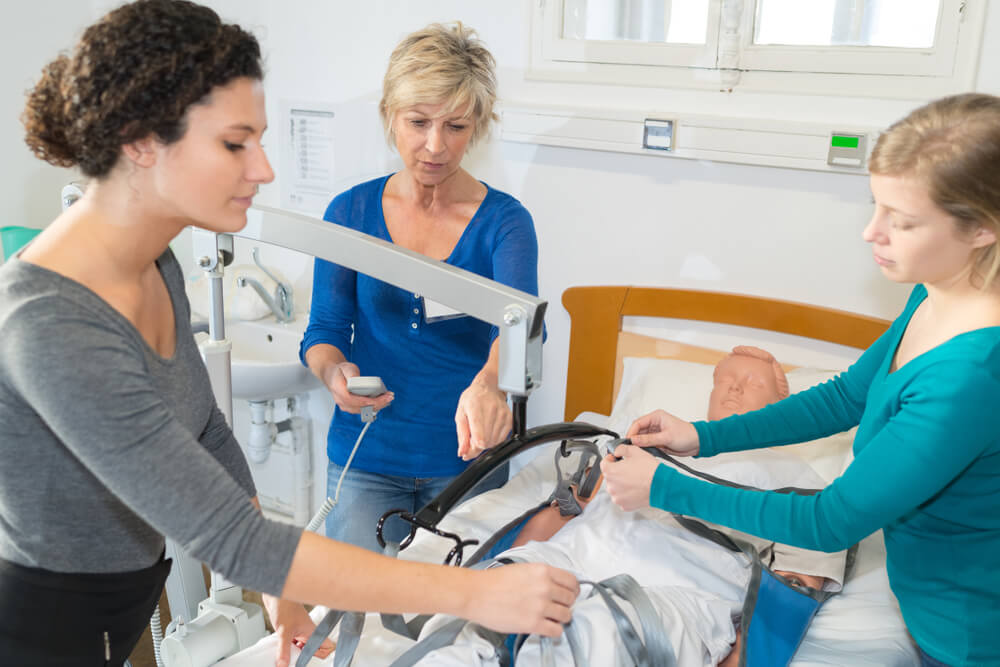
Care home staff often need to lift and move people or objects. Manual handling training is key to adult social care training because it teaches the correct techniques for safe moving and handling people to minimise any risk of injury.
Manual handling training teaches staff how to:
- Move, handle and assist care home residents including older, frail adults safely.
- Use hoists and mobility aids correctly.
- Reduce the risk of injury.
5. Equality, diversity and human rights
Equality, diversity and human rights training helps care staff understand the importance of respectful and inclusive care by treating all individuals fairly and equally, regardless of their background, age, or gender. It emphasises respect for human rights and teaches strategies to combat discrimination and prejudice.
This training helps staff:
- Treat residents with dignity and respect.
- Provide inclusive care.
- Avoid discrimination.
6. Safeguarding Adults
All care staff must be trained to:
- Recognise signs of abuse or neglect.
- Understand safeguarding policies and reporting procedures.
- Act promptly to protect residents from harm by reporting abuse or neglect.
7. Basic life support and first aid
Vulnerable individuals often require first aid and training must be given including how to recognise breathing problems, identifying common illnesses, identifying injuries in the wake of falls or slips.
Many care homes require staff to be trained in:
- Basic life support such as giving CPR.
- Emergency response procedures.
- Recognising when to seek medical help.
8. Information governance & data security
This training helps staff handle personal information safely.
Role-specific/specialist care home training
Some roles require extra training depending on care home residents’ needs.
Mental Capacity Act (MCA) and Deprivation of Liberty Safeguards (DoLS)
Understanding the legal requirements for residents who cannot make their own decisions is crucial.
MCA and DoLS training helps staff understand:
- How to assess mental capacity.
- How to support decision-making.
- When and how restrictions can be applied lawfully.
- Managing distress and behaviours in a supportive way.
Medication management
Staff involved in medicines must be trained in:
- Handling, storing and administering medication safely.
- Record keeping.
- Recognising and reporting medication errors or side effects.
Food hygiene and nutrition
This includes:
- Safe food handling.
- Supporting residents with eating and drinking.
- Understanding special dietary needs.
Dementia awareness and dementia care
Where residents are living with dementia, staff should understand:
- Different types of dementia.
- Communication techniques.
Induction, ongoing and refresher training
Induction training
New care home staff should receive induction that covers:
- The care home’s policies and procedures.
- Core mandatory training.
- Supervised practice.
Although it isn’t legally mandatory, the Care Certificate is often used in England to support new care staff in developing essential skills. It is a set of standards used to demonstrate competence.
Ongoing professional skills
Training should be:
- Updated regularly.
- Recorded and monitored.
- Tailored to changes in guidance or residents’ needs.
By investing in comprehensive and ongoing staff training, care homes not only meet regulatory requirements but also create a positive environment where residents feel safe, respected, and well cared for.
For families choosing a care home, strong training standards offer reassurance that loved ones are supported by knowledgeable and capable professionals.
Who is responsible for staff training?
Care home providers and managers are responsible for ensuring staff receive appropriate training and support.
How often must care home training be updated?
Many courses require annual refreshers, while others depend on risk assessments and role responsibilities. Refresher training is often annually for some topics like infection control or moving and handling and every 2-3 years for others, depending on employer policy and risk.
FAQs
Is training a legal requirement for care homes in UK?
Yes. Regulations require care providers to ensure staff are properly trained, supervised, and competent to perform their roles.
How often must training be updated?
Many courses require annual refreshers, while others depend on risk assessments and role responsibilities.
Who is responsible for care home staff training?
Care home providers and managers are responsible for ensuring staff receive appropriate training and support.
Looking for a care home?
Search for care homes near you, compare fees, and read reviews from families to help you choose.