
When a person is diagnosed with dementia, often families feel like they have stepped into unknown waters. Why do people with dementia feel distressed? This article features practical tips on how to manage distress in dementia using the Kitwood model and a personal account from a son facing his mum’s diagnosis of vascular dementia.
Page contents
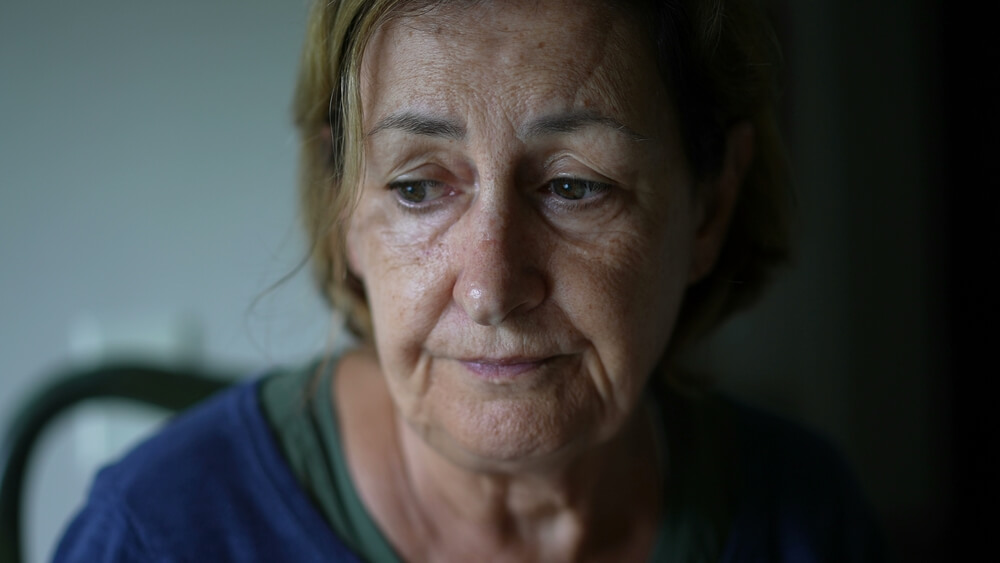
Tips for families to manage distress in dementia
Kerry Lyons Consultant Admiral Nurse for Frailty and Physical Health at Dementia UK highlights it is important to understand what the signs of distress are in a person living with dementia.
What are the signs of distress in dementia?
- Sudden onset of agitation and/or aggression.
- Withdrawal.
- Tearfulness.
- Repetitive questioning.
- Refusing care or food.
- Hallucinations and/ or confusion.
How to respond to distress in dementia
- Stop, pause, observe and ask yourself, ‘What is this person trying to tell us?’
- Rule out delirium. Here are the signs and symptoms of delirium.
- Look for physical causes, consider pain, infection, constipation, dehydration. Seek an early clinical opinion, if needed.
- Review and reduce environmental stressors. For example, lower noise levels, regain and maintain routine, use familiar objects to reorientate.
- Consider non-pharmacological options first.
- Involve family carers as they know the person best.
- Seek clinical oversight, if necessary.
Why do people with dementia feel distressed?
Kerry Lyons says: “Distress in dementia is not a random occurrence, it is meaningful. Behaviours are often signals to indicate unmet needs for comfort, identity, inclusion, attachment or occupation.
“Kitwood’s model can provide a compassionate framework for interpreting new and presenting behaviours, this in turn can help to positively guide our care and support strategies.”
What is Kitwood’s Model of dementia care and why does it matter?
Tom Kitwood first came up with a person-centred approach to dementia, which sees the person with dementia as an equal person with feelings, rights and desires.
Kitwood’s model of person-centred care can help to interpret distress and reframe it as communication, rather than as ‘challenging behaviours.’
Tom Kitwood identified five psychological ‘vital’ needs of deep importance in dementia:
- Comfort: Physical and emotional.
- Identity: Recognition of personal history.
- Inclusion: Feeling part of a social group or networks.
- Attachment: Security and emotional.
- Occupation: Engagement in meaningful activity.
Kerry Lyons adds: “Kitwood’s Model highlighted that when the above needs are unmet, distress often can manifest as agitation, withdrawal, or aggression.
“Considering this, he encourages us all to ask: ‘What is this person actually trying to tell us?’”
Andrew’s story ‘Preserving the essence of mum’
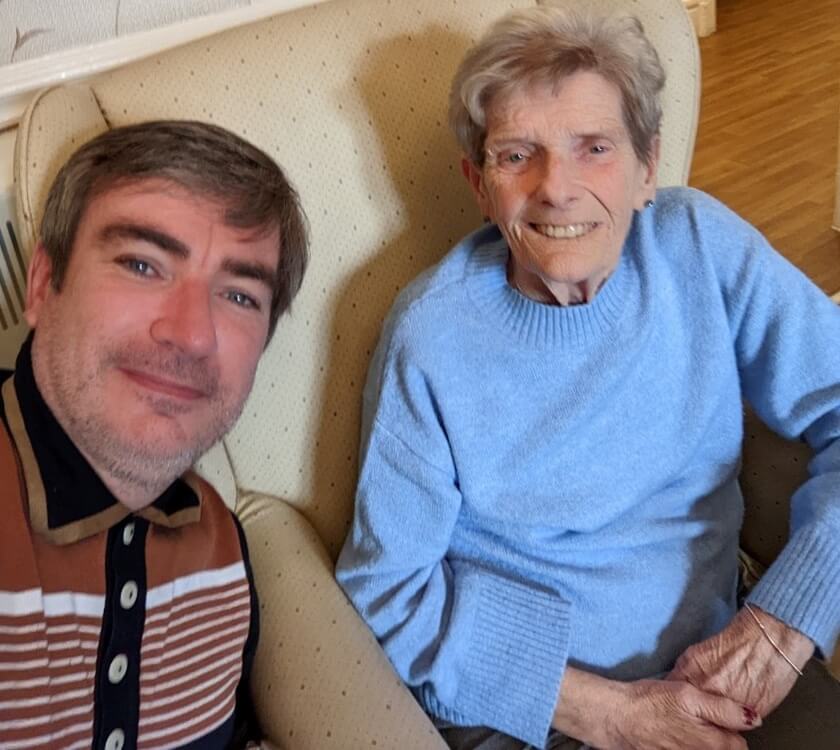
For Andrew Swindells, who is a member of Dementia UK’s Lived Experience Advisory Panel (LEAP), his mum Ann’s diagnosis of vascular dementia was more than just a medical event.
“It was the start of unknown changes and a journey that went on to test our family’s love, resilience and understanding.
“Comfort isn’t just about physical care; it is about emotional reassurance.
“Familiar routines alongside the calm presence brought by my dad, and wider family support all helped mum feel safe, even as her world became diminished and disorientating.
“As dementia progressed, the previously established roles within our family shifted. Now, touch, tone, and the presence of family mattered more than words.
“This provided Mum with vital moments of connection amidst disorientation.
“I felt that this clearly demonstrated that attachment acted as a powerful antidote to fear and isolation.
‘A fiercely independent woman’
“We as a family continued to work hard to enable her to stay engaged and involved through simple tasks, shared mealtimes, and quiet companionship. Inclusion for Mum meant recognising her value, not just her limitations created by dementia as a condition.
“It is important to remind ourselves that purpose doesn’t disappear with dementia, nor should a condition define us. Introducing music, gentle routines, and tailored activities all gave Mum moments of joy.
“Whilst dementia as a condition had taken so much away from Mum and our family, she remained my mum. She still was a wife to my dad, a nan, and a fiercely independent woman.
“When Dad said he just couldn’t cope anymore, I recall the sadness we all felt in deciding to move Mum into 24-hour care.
“We felt that we had failed her. I now realise that this decision was an act of love, and one made to address escalating needs.”
“The journey into care was an unplanned one, amidst escalating needs and risks, which led to Mum being sectioned under the Mental Health Act.
“The guilt at this time was immense and created stress points within the family. These fractures tested previously strong relationships.
“We turned to professionals for support and decided to move Mum permanently into 24-hour care.
“I witnessed care staff using meaningful engagement to restore calm and dignity for Mum, especially whilst she adapted to her new and unfamiliar surroundings.
‘Glimpses of Mum reappeared’
“Staff gave person-centered care. They didn’t just treat Mum’s symptoms; they saw her as a person. Through appropriate medication, tailored meaningful engagement and genuine connection, Mum was able to find moments of comfort and clarity.
“This was a turning point as glimpses of Mum reappeared.
“My dad started to let go of his guilt. He was reassured in seeing that Mum was safe and being cared for. He was able to once again return to being a husband rather than a direct caregiver.”
Kerry Lyons adds: “The experience of Andrew and his family shows that person-centred care is not just theory. In reality, it changes lives and we can see from looking at Ann’s journey through the lens of Kitwood’s model how using the principles has helped to transform her care.
“It is clear from speaking with Andrew that there is significant importance in the power of active listening, planning and working in partnership with families.
“We all have a role in preserving personhood throughout a person’s journey. In Andrew’s case, he beautifully describes this as a role in ‘preserving the essence of his mum’.”
FAQs
How to respond to distress in dementia
Stop, observe and ask yourself ‘What is this person trying to tell us?’ Consider whether it is delirium. Look for physical causes, consider pain, infection, constipation, dehydration. Review and reduce any environmental stressors e.g. lower noise levels, regain and maintain routine, use familiar objects to reorientate. Consider non-pharmacological options. Involve family carers as they know the person best. Seek clinical oversight, if necessary.
What are the signs of distress in dementia?
The signs of distress in someone with dementia include a sudden onset of agitation or aggression, withdrawal, tearfulness, repetitive questioning, refusing care or food, hallucinations or confusion.
Why do people with dementia feel distressed?
Distress in dementia is not a random occurrence but is often meaningful, according to Kerry Lyons at Dementia UK. She explains that behaviours can be signals of unmet needs, such as a need for comfort, identity, inclusion, attachment or meaningful occupation.
Find a care home near you
Search for care homes near you, compare fees, and read reviews from families to help you choose.
