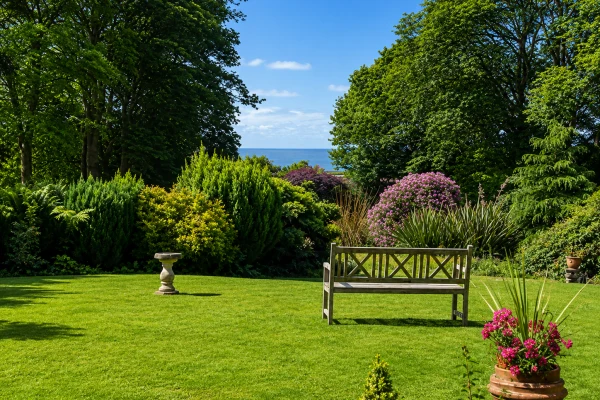
Senwick House Residential Care Home is a welcoming, family-operated care home set within attractive landscaped gardens on Scotland's picturesque south-west coastline. Registered to accommodate up to 17 residents, the home provides a peaceful, friendly environment where personal choice, dignity, and independence are always encouraged.
Residents can choose from comfortable single and double en-suite bedrooms, many of which overlook the beautiful gardens. Dedicated care staff are available around the clock, offering assistance...
Senwick House Residential Care Home is a welcoming, family-operated care home set within attractive landscaped gardens on Scotland's picturesque south-west coastline. Registered to accommodate up to 17 residents, the home provides a peaceful, friendly environment where personal choice, dignity, and independence are always encouraged.
Residents can choose from comfortable single and double en-suite bedrooms, many of which overlook the beautiful gardens. Dedicated care staff are available around the clock, offering assistance with daily living, companionship, or simply accompanying residents on a stroll through the grounds.
To help everyone feel settled and at home, residents are encouraged to personalise their rooms with treasured photographs, decorations, or smaller pieces of furniture.
Life at Senwick House follows a relaxed daily routine. Breakfast can be enjoyed privately in residents' bedrooms or together in the dining room, depending on individual preference. Morning coffee and afternoon tea are served in the light-filled lounge or on the sun terrace, where residents can take in views across the gardens towards Brighouse Bay. During the colder months, the cosy log fire provides the perfect place to relax, and friends and family are welcome to visit throughout the year.
Fresh, home-cooked meals are prepared daily using seasonal ingredients, including fruit and vegetables grown in the home's own gardens whenever possible. Menus are varied and nutritious, with special dietary requirements and individual food preferences carefully catered for to ensure every resident enjoys meals suited to their needs.
Loading travel time
Care Provided by Senwick House
Primary Care Categories
Older Person Care
Dementia
Mental Health Condition
Physical Disability
Visual / Hearing Impairment
Eating Disorders
Length of Stay
Permanent Care
Respite Care
Care Types Provided
Residential Care
Dementia Residential Care
For a maximum of 13 Service Users
Dementia Care Types
Mild Dementia
Moderate Dementia
Advanced/Complex Dementia
Other Care Provided
Parkinson's Disease
Stroke
Palliative / End of Life Care
COPD/Pulmonary Disease
Bariatric Care/Obesity
Convalescent Care
Acquired Brain Injury (ABI)
Facilities
Own Furniture if required
Pet Friendly (or by arrangement)
Minibus or other transport
Stairlift
Wheelchair Access
Gardens
Phone Point in own room
Television point in own room
Funding & Fees
Weekly Charges per Person
Type of care
Permanent
Respite
Residential Care
From £1,480
From £1,480
Residential Dementia Care
From £1,480
From £1,480
Contact Senwick House to confirm what's included and get a personalised quote:
Our rates are inclusive of hairdressing, chiropody, activities and entertainment, aromatherapy and massage.
The price(s) shown are provided by the care home. Contact Senwick House for full pricing details and T&Cs.
Funding Types Accepted
Self-Funding (Private)
Local Authority with Top-up
Local Authority
Support you may be entitled to
If you choose a care home based in Scotland, you may be eligible for the Scottish Government's Free Personal Care funding of up to £260.30 per week if you're over the age of 65. This support is not reflected in this fee amount.
Review from Will C (Son of Resident) published on 29 September 2026 Submitted via Website•
Overall Experience
I have nothing but praise for Senwick and all it's staff. I am safe in the knowledge that my mother is being kept in the best care possible in a most picturesque and comfortable environment. Tanya, Marcus and every member of staff I've dealt with have been nothing but helpful and attentive. They...
I have nothing but praise for Senwick and all it's staff. I am safe in the knowledge that my mother is being kept in the best care possible in a most picturesque and comfortable environment. Tanya, Marcus and every member of staff I've dealt with have been nothing but helpful and attentive. They always go the extra mile.
Facilities
Care / Support
Cleanliness
Treated with Dignity
Food & Drink
Staff
Activities
Management
Safety / Security
Rooms
Value for Money
Review from Ellie H (Daughter of Resident) published on 18 September 2026 Submitted via Website•
Overall Experience
I was so grateful to have Mum accepted in for respite care, it was very short notice and was a very awkward situation we found ourselves in. The management have been so considerate, supportive and calming, they regularly check in with me, informing me how Mum is settling in. I feel the space is...
I was so grateful to have Mum accepted in for respite care, it was very short notice and was a very awkward situation we found ourselves in. The management have been so considerate, supportive and calming, they regularly check in with me, informing me how Mum is settling in. I feel the space is very homely and doesn't feel like a care home in anyway. They have treated Mum with such care and dignity, it has been a wonderful surprise as no one wants their parent to be in a residential home. I can not praise the staff enough, you can tell they have a high work ethic very positive, encouraging and genuinely caring, they always have a smile and patience is always given. Her bedroom is bright and airy and the home is spotlessly clean. I stayed one evening for tea and the cook served a delicious home made meal. You can see how happy she is living there. The grounds are so beautiful and tranquil. I can not think of anywhere else that would be more perfect than Senwick for our family.
Facilities
Care / Support
Cleanliness
Treated with Dignity
Food & Drink
Staff
Activities
Management
Safety / Security
Rooms
Value for Money
Review from Ann S (Resident / Service User) published on 16 September 2026 Submitted via Website•
Overall Experience
This is a delightful house, full of colour and sunlight with many lovely art works. Super semi wild garden. It is run by a family and truly has a family feel - including the staff. Everyone is patient, caring and gentle. Prompt professional Help always available as and when neeed. Excellent...
This is a delightful house, full of colour and sunlight with many lovely art works. Super semi wild garden. It is run by a family and truly has a family feel - including the staff. Everyone is patient, caring and gentle. Prompt professional Help always available as and when neeed. Excellent choice of activities if required. I appreciate being able to have meals in my room on occcasion, and getting a lift to church Uk in(being a retired minister). Excellent wifi. Yummy food!
Facilities
Care / Support
Cleanliness
Treated with Dignity
Food & Drink
Staff
Activities
Management
Safety / Security
Rooms
Value for Money
Review from Alison M (Daughter of Resident) published on 24 May 2017 Submitted via Website•
Overall Experience
Senwick House... I can highly recommend for its care and values towards their residents. The feeling when you enter the house is one of homeliness and a happy family place to reside! Recent refurbishments creating a large sun lounge and external outside rooftop balcony simply gives residents more...
Senwick House... I can highly recommend for its care and values towards their residents. The feeling when you enter the house is one of homeliness and a happy family place to reside! Recent refurbishments creating a large sun lounge and external outside rooftop balcony simply gives residents more space to enjoy and relax in. Thought is put into making residents daily life as comfortable and active as possible. Staff and management all take an involved role in the residents care . People are regarded as individuals. Care plans reflect that fact. Here people are not simply existing, living out their final years ..... they are actively encouraged and loved. That makes this residence, in my opinion, stand out from others I looked at in this beautiful area for my precious Mother. Thank you all!!
Facilities
Care / Support
Cleanliness
Treated with Dignity
Food & Drink
Staff
Activities
Management
Safety / Security
Rooms
Value for Money
Regulatory Rating
Care Inspectorate is responsible for the registration and inspection of social care services in Scotland.View Latest Report
Bed Vacancies
Please contact us for latest vacancies.
News (0) & Events (0)
News
There are no news items for Senwick House.
Upcoming Events
There are no upcoming events for Senwick House.
Awards / Recognitions (0)
There are currently no awards/recognitions posted yet for Senwick House.
Accreditations
There are no accreditations posted yet for Senwick House.
Meet the Team (0)
There are no Team Members posted yet.
Frequently Asked Questions about Senwick House
What types of Care is Senwick House registered for?
Older Person Care, Dementia, Mental Health Condition, Physical Disability, Visual / Hearing Impairment, Eating Disorders are the registered (by the Care Quality Commission) categories of Care.
How many Rooms does Senwick House have?
There are 9 Single Rooms and 2 Couples/Companion Rooms.
What are the Facilities & Services at Senwick House?
Own Furniture if required, Pet Friendly (or by arrangement), Minibus or other transport, Stairlift, Wheelchair Access, Gardens, Phone Point in own room, Television point in own room are some of the Facilities & Services.
How far is Senwick House to the centre of Kirkcudbright?
3.5 mile(s) as the crow flies, distance by road may be significantly further.
Information on this page is displayed without responsibility for its accuracy on the part of carehome.co.uk. Please contact Senwick House to verify any information. View our terms and conditions. Senwick House has an Enhanced Service -what an Enhanced Service includes.