Understanding Dementia: Why Immersive Training Matters

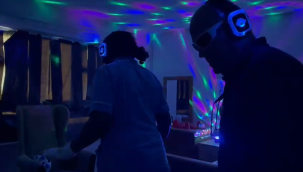
At Westgate Healthcare, delivering exceptional care starts with understanding the people we support. Recently, our Group Training Manager, Maria, took part in a dementia Virtual facilitator course with Training2Care – an experience designed not just to educate, but to transform perspective.
Insight Into Living with Dementia
Created by dementia care expert P.K. Beville, offers an insight into what it can feel like to live with dementia. With over 900,000 people currently living with dementia in the UK, high-quality, empathetic care has never been more important.
Exclusive In-House Training
Westgate Healthcare is proud to be one of the few care providers in the UK to deliver this training in-house. Training2Care carefully selects the organisations they work with, making this experience even more special. This session included four participants from three different care settings, demonstrating the uniqueness of this opportunity.
Embedding Learning Across Our Teams
Maria’s dedication to continuous improvement and high standards in development is at the heart of Westgate’s approach. She is exploring ways to integrate this training into the three-day induction programme, ensuring every new team member starts with a strong understanding of dementia care.
Fully Immersive Experience
The training is hands-on and immersive. After an initial briefing, participants use specially designed tools to simulate sensory and physical challenges faced by people with dementia. This includes:
Goggles to distort vision Gloves to restrict movement Inserts in shoes to create discomfort Ear defenders to alter sound perception
Once inside the simulated environment, the impact is immediate and overwhelming. Participants experience a constant wave of noise, disorientation, and confusion. Tasks that would normally feel simple suddenly become frustrating and exhausting.
Noise and Sensory Overload
While the average person can filter sounds, people living with dementia often cannot. They may hear multiple noises at once without the ability to focus on just one, which can become distressing. This helps explain behaviours such as removing hearing aids, as these devices can amplify sound.
Changes in Touch and Physical Sensation
The simulation highlights how physical discomfort can affect movement. Many people living with dementia experience sensations similar to pins and needles in their feet, which can lead to shuffling or removing shoes. This can also make everyday tasks like buttoning a shirt much more difficult.
Visual Perception and Colour Recognition
Vision is another area significantly affected. People with dementia often revert to recognising only primary colours such as red, blue, and green, while more complex shades become difficult to navigate. Sight can also be altered, making objects appear misleading in size or distance.
By placing participants directly into this environment, the training goes beyond theory, it builds genuine empathy and understanding.
Maria, Group Training Manager – “Thank you to Training2Care for such a fantastic and inspiring two-day course. I feel incredibly grateful to have had the opportunity to attend. The experience has left me feeling motivated and excited to begin rolling this out to our teams. Understanding dementia from the individual’s perspective was truly powerful, and I’m looking forward to sharing this learning to further enhance the care we provide. John was wonderful – his passion, knowledge, and genuine commitment really shone through and made the training incredibly engaging and meaningful.”
Experiences like this are invaluable. They remind us that behaviours often associated with dementia are not simply symptoms to manage, but responses to a world that has become confusing, overwhelming, and at times frightening.
Discover your nearest care home today and get in touch to discuss the support and care your loved one deserves
click here for more details or to contact Westgate Healthcare Ltd
Latest Care Provider & Regulatory News
 24-Sep-28
Night out
24-Sep-28
Night out
 13-Apr-26
Cherry Tree House Harnesses The Power of Music Therapy
13-Apr-26
Cherry Tree House Harnesses The Power of Music Therapy
 13-Apr-26
Meet the Team Monday
13-Apr-26
Meet the Team Monday
 13-Apr-26
LOCAL CARE HOME CHATER LODGE DONATES TO FOOD BANK SUPPORT
13-Apr-26
LOCAL CARE HOME CHATER LODGE DONATES TO FOOD BANK SUPPORT
 13-Apr-26
Monmouthshire Care Home Launches New Garden Club ‘Sunshine and Soil’
13-Apr-26
Monmouthshire Care Home Launches New Garden Club ‘Sunshine and Soil’