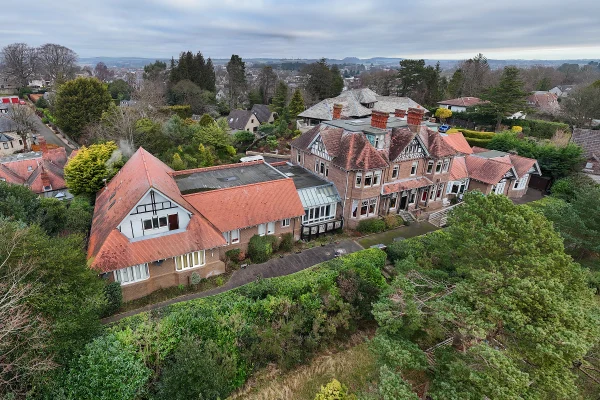
The Bughties nursing home is a traditional Tudor-style building set in the heart of residential Broughty Ferry. It is a small and friendly care home where each member of the team goes above and beyond for the residents.
The home spans 3 floors, with access to each floor via a lift or stairs.
The home retains many of the building's original features, including the stained glass window on the staircase, detailed...
The Bughties nursing home is a traditional Tudor-style building set in the heart of residential Broughty Ferry. It is a small and friendly care home where each member of the team goes above and beyond for the residents.
The home spans 3 floors, with access to each floor via a lift or stairs.
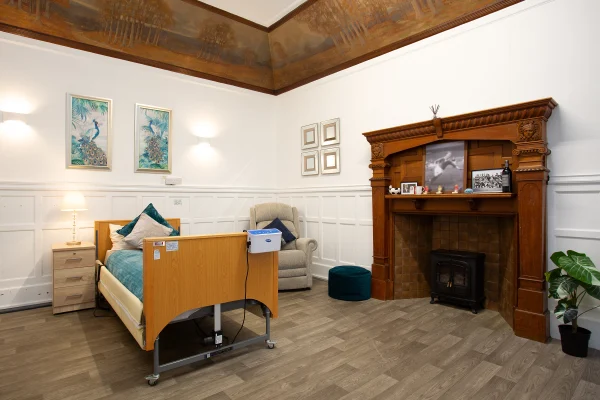
The home retains many of the building's original features, including the stained glass window on the staircase, detailed architrave on the ceilings, and the large stone fireplace.
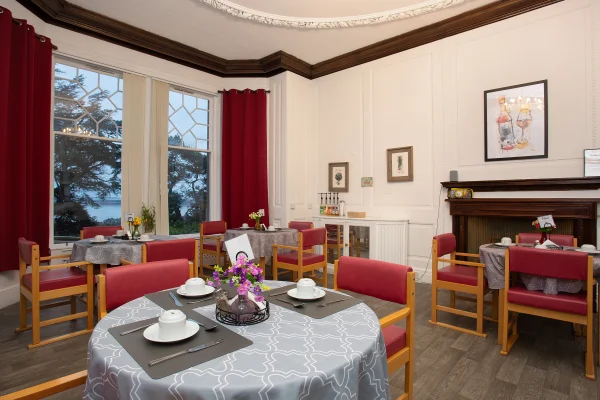
Residents are able to enjoy a selection of communal spaces, including two lounges, a large dining room, a sensory room, and a café area.
An extensive garden area lies to the rear of the building, with magnificent views over Broughty Ferry and the River Tay. A minibus is available for regular trips out. The Health and Wellbeing Coordinators organise a variety of activities to meet individual abilities and preferences, including daily exercises, book club, word puzzles, board games, arts and crafts and gardening. They also host regular themed events throughout the year.
All meals are freshly prepared in-house by the talented chefs, including a selection of home baking.
Loading travel time
Care Provided by The Bughties
Primary Care Categories
Older Person Care
Dementia
Learning Disability / Autism
Physical Disability
Visual / Hearing Impairment
Length of Stay
Permanent Care
Respite Care
Care Types Provided
Residential Care
Nursing Care
Dementia Residential Care
Dementia Nursing Care
For a maximum of 28 Service Users
Dementia Care Types
Mild Dementia
Moderate Dementia
Other Care Provided
Parkinson's Disease
Stroke
Palliative / End of Life Care
COPD/Pulmonary Disease
Bariatric Care/Obesity
Convalescent Care
Accreditations
Adopt A Grandparent
Facilities
Own Furniture if required
Pet Friendly (or by arrangement)
Smoking not permitted
Close to Local shops
Near Public Transport
Minibus or other transport
Lift
Wheelchair Access
Gardens
Bar/Café
Phone Point in own room
Television point in own room
Residents Internet Access
Funding & Fees
All weekly fees are a guideline and subject to a care assessment prior to admission. As every individual’s needs are different, we review each case carefully to ensure the right level of care is provided. For a more accurate quote tailored to your circumstances, please feel free to get in touch with us.
Contact The Bughties to confirm what's included and get a personalised quote:
Review from Alan T (Son of Resident) published on 20 September 2024 Submitted via Website•
Overall Experience
My mother was a resident of The Bughties for 5 years until her passing from Alzheimer's in July 2024. My sister and I could not be more happy with the professionalism of the service delivered with kindness and consideration. Bughties made Mum as comfortable as possible and us welcome on every...
My mother was a resident of The Bughties for 5 years until her passing from Alzheimer's in July 2024. My sister and I could not be more happy with the professionalism of the service delivered with kindness and consideration. Bughties made Mum as comfortable as possible and us welcome on every visit. At the end of her life the staff were exactly what we all needed kind, attentive and caring. A wonderful group of people to entrust with your loved ones.
Facilities
Care / Support
Cleanliness
Treated with Dignity
Food & Drink
Staff
Activities
No Rating
Management
Safety / Security
Rooms
Value for Money
Regulatory Rating
Care Inspectorate (CI) Rating
Date: 19 May 2025
How well do we support people's wellbeing?
Good
(4)
How good is our leadership?
Good
(4)
How good is our staff team?
Good
(4)
How good is our setting?
Good
(4)
How well is care and support planned?
Adequate
(3)
Care Inspectorate is responsible for the registration and inspection of social care services in Scotland.View Latest Report
Bed Vacancies
Please contact us for latest vacancies.
News (0) & Events (0)
News
There are no news items for The Bughties.
Upcoming Events
There are no upcoming events for The Bughties.
Awards / Recognitions (0)
There are currently no awards/recognitions posted yet for The Bughties.
What types of Care is The Bughties registered for?
Older Person Care, Dementia, Learning Disability / Autism, Physical Disability, Visual / Hearing Impairment are the registered (by the Care Quality Commission) categories of Care.
How many Rooms does The Bughties have?
There are 28 Single Rooms.
What are the Facilities & Services at The Bughties?
Own Furniture if required, Pet Friendly (or by arrangement), Smoking not permitted, Close to Local shops, Near Public Transport, Minibus or other transport, Lift, Wheelchair Access, Gardens, Bar/Café, Phone Point in own room, Television point in own room, Residents Internet Access are some of the Facilities & Services.
How far is The Bughties to the centre of Dundee?
4.4 mile(s) as the crow flies, distance by road may be significantly further.
Information on this page is displayed without responsibility for its accuracy on the part of carehome.co.uk. Please contact The Bughties to verify any information. View our terms and conditions. The Bughties has an Enhanced Service -what an Enhanced Service includes.