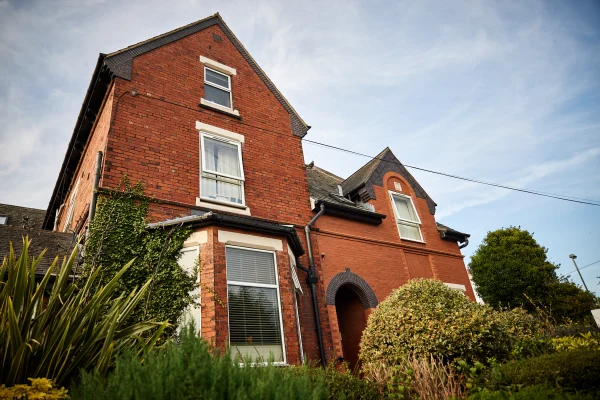
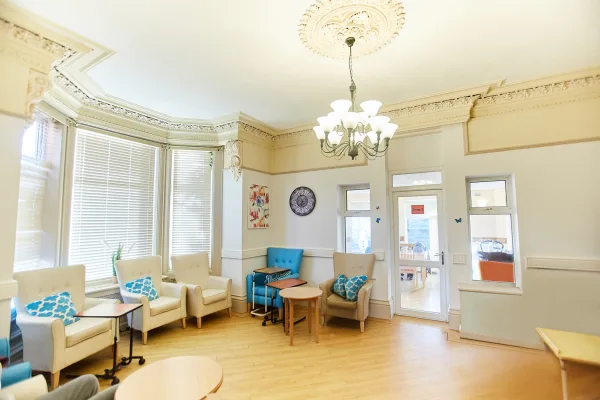
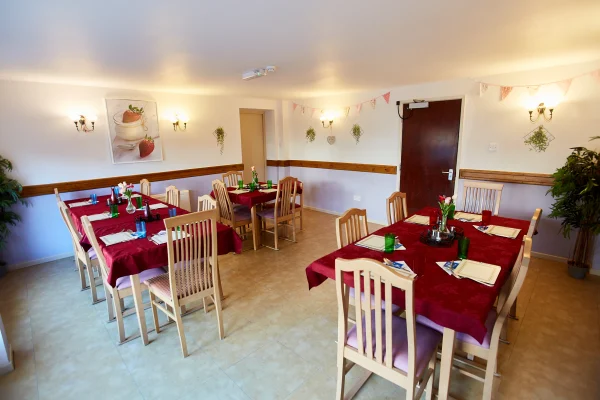


The Hollies is a homely residential care home set in a quiet suburb of Leeds.
They look after only 28 residents and provide them with the highest standard of care. The building is a Victorian property extended to create multiple large communal spaces on the ground floor and bedrooms over three floors. The Hollies has been in operation as a care home since the 1990s and is situated close to the...
Care Provided by The Hollies
Primary Care Categories
- Older Person Care
- Dementia
Length of Stay
- Permanent Care
Care Types Provided
- Residential Care
- Dementia Residential Care
- For a maximum of 28 Service Users
Dementia Care TypesMild Dementia
Someone living with our definition of "mild dementia" might experience some or all of the following:
- Memory problems such as misplacing items and not be able to recall recent events (however, in some forms of dementia a person's memory may be unchanged)
- Difficulties thinking through problems and planning, making decisions
- Language and communication issues such as finding it difficult to recall the appropriate word in a conversation or following a conversation
- Poor orientation, getting lost in areas previously familiar to them
- Difficulty judging distances (more falls than usual)
- Changes in their normal mood including anxiety and depression
- In certain types of dementia, personality and behaviour changes may be present alongside or instead of issues with memory or concentration.
Moderate Dementia
Someone living with our definition of "moderate dementia" might experience some or all of the following:
- Worsened memory problems. Not always recognising own family members and friends. Repeating the same questions over and over again
- Worsened language and communication issues, forgetting what they are saying mid-sentence. Not being able to understand what someone else is saying
- More frequent confusion, e.g. about the time of day or where they are, including their own home
- Apathy, depression and anxiety
- Believing things that aren't true (paranoia)
- Frequent hallucinations
- Lack of emotional control, quick to anger, fearfulness, sadness
- Loss of inhibition
- Difficulties sleeping or waking during the night and behaving as though it is daytime - loss of circadian rhythm.
Advanced Dementia
Someone living with our definition of "severe dementia" might experience some or all of the following:
- Severe memory problems. Not recognising family members and friends. Not being able to recall their own name
- Severe language and communication issues, not being able to understand what someone else is saying
- Severe confusion, e.g. about the time of day or where they are, including their own home
- Apathy, depression and anxiety
- Believing things that aren't true (paranoia)
- Frequent hallucinations
- Lack of emotional control, quick to anger, fearfulness, sadness
- Loss of inhibition
- Difficulties sleeping or waking during the night and behaving as though it is daytime - loss of circadian rhythm.
Verbally or physically aggressive behaviour
If your loved one displays this type of behaviour you may need a care home that has specially trained staff. Verbal/physical aggression is often defined:
- Consistent shouting and screaming
- Verbal abuse
- Physical abuse
How we define Dementia Care Types
Mild Dementia
Someone living with our definition of "mild dementia" might experience some or all of the following:
- Memory problems such as misplacing items and not be able to recall recent events (however, in some forms of dementia a person's memory may be unchanged)
- Difficulties thinking through problems and planning, making decisions
- Language and communication issues such as finding it difficult to recall the appropriate word in a conversation or following a conversation
- Poor orientation, getting lost in areas previously familiar to them
- Difficulty judging distances (more falls than usual)
- Changes in their normal mood including anxiety and depression
- In certain types of dementia, personality and behaviour changes may be present alongside or instead of issues with memory or concentration.
Moderate Dementia
Someone living with our definition of "moderate dementia" might experience some or all of the following:
- Worsened memory problems. Not always recognising own family members and friends. Repeating the same questions over and over again
- Worsened language and communication issues, forgetting what they are saying mid-sentence. Not being able to understand what someone else is saying
- More frequent confusion, e.g. about the time of day or where they are, including their own home
- Apathy, depression and anxiety
- Believing things that aren't true (paranoia)
- Frequent hallucinations
- Lack of emotional control, quick to anger, fearfulness, sadness
- Loss of inhibition
- Difficulties sleeping or waking during the night and behaving as though it is daytime - loss of circadian rhythm.
Advanced Dementia
Someone living with our definition of "severe dementia" might experience some or all of the following:
- Severe memory problems. Not recognising family members and friends. Not being able to recall their own name
- Severe language and communication issues, not being able to understand what someone else is saying
- Severe confusion, e.g. about the time of day or where they are, including their own home
- Apathy, depression and anxiety
- Believing things that aren't true (paranoia)
- Frequent hallucinations
- Lack of emotional control, quick to anger, fearfulness, sadness
- Loss of inhibition
- Difficulties sleeping or waking during the night and behaving as though it is daytime - loss of circadian rhythm.
Verbally or physically aggressive behaviour
If your loved one displays this type of behaviour you may need a care home that has specially trained staff. Verbal/physical aggression is often defined:
- Consistent shouting and screaming
- Verbal abuse
- Physical abuse
How we define Dementia Care Types
- Mild Dementia
- Moderate Dementia
Other Care Provided
- Parkinson's Disease
- Stroke
- Palliative / End of Life Care
- COPD/Pulmonary Disease
Accreditations
- Adopt A Grandparent

Facilities
- Own Furniture if required
- Pet Friendly (or by arrangement)
- Smoking not permitted
- Close to Local shops
- Near Public Transport
- Lift
- Stairlift
- Wheelchair Access
- Gardens
- Phone Point in own room
- Television point in own room
- Residents Internet Access
Funding & Fees
Weekly Charges per Person
The Hollies is a specialist dementia service, residents will be admitted if they have some form of dementia, or display some behavioural characteristics. There are two rates, one for standard rooms and another rate for en-suite rooms.
Fees include accommodation, all food and drink, laundry and cleaning services. Fees exclude external services such as chiropody and hairdressing.
The price(s) shown are provided by the care home. Contact The Hollies for full pricing details and T&Cs.
Contact The Hollies to confirm what's included and get a personalised quote:
Funding Types Accepted
- Self-Funding (Private)
- Local Authority with Top-up
- Local Authority
- NHS Continuing Healthcare (CHC)
Good to Know
Group / Owner
- Garforth Care Homes Ltd
- Private Owned
Person in charge
- Aimee Rungen (Manager)
Local Authority / Social Services
Admission Information
- Mixed (no single-gender units)
- Ages 60+
Care Home Design/Build
- Purpose Built: No
- Last Refurbishment: 2022
- Number of floors: 2
Room Information
- Single Rooms (28)
- Single Rooms with ensuite Wet Room (4)
Visiting
- Visiting is not restricted, however they ask that visitors mindful of visiting around mealtimes, unless previously arranged.
Parking
- The car park is situated at the side of The Hollies accessed by Station Fields.
The Hollies Reviews (25)
The Hollies has a Review Score of 9.8 (9.754) out of 10, based on 14 reviews in the last 2 years.
Over all time The Hollies has 25 reviews.
My mother has been in The Hollies care home since December 2020, when it was nearing the end of the first lockdown, due to the Covid 19 pandemic. I myself have never been into the care home due to the national lockdown and stayed away from my mother until it was safer to visit her. When the restrictions were lifted, I was allowed to visit my mother but only as far as the conservatory which is situated at the end of the property. Following all the national guidelines. I can only comment on what I have seen from the conservatory and my mother's appearance, wellbeing and hygiene. I have observed that there seems to be a lack of stimulation and entertainment for the residents and I would love to see some of this in the near future. It must be a very long day from getting out of bed to back to bed just walking around or sitting in a chair, watching television. My mother seems disinterested in television and due to her being very introverted, she tends to sit back and do nothing.
Thank you for taking the time to complete this review. We hope that you will be able to visit more frequently, as the restrictions continue to lift. Prior to the pandemic, we had an activity timetable in place for our residents, including setting up trips out for them, however, this service was...
The Hollies is well run and I know that my father is safe and well cared for. Nothing is too much trouble for the staff and they always make me very welcome when I visit Dad. My father enjoys the food and it is varied with regular drinks and snacks throughout the day, in addition to the main meal at lunchtime. I'm always kept informed if there are any issues with Dad and it's never a problem getting through on the telephone, which is very important to a family member. We were all kept informed by phone of any changes to government guidelines during the pandemic.
The staff are all extremely caring and concerning when my mum is not feeling as good as usual. There is plenty for them to do to keep occupied. There is a good choice of food. The Hollies has recently changed ownership and they have brought lots of new ideas and activities.
Although the building is not modern inside, I gave found the staff becoming, knowledgeable about my father and very patient in their dealings with residents.
Experience superb! Nothing is too much trouble for The Hollies staff, who are at all times attentive and caring. This applies to both the physical care and the emotional needs of the residents who are treated like and looked upon as family. For the 17+ months she was there, I always knew that she was being looked after and her self-contentment was obvious when visiting, which I did 4 times a week. I even felt able to go on holiday with a clear conscience! I cannot recommend it too highly!
Regulatory Rating
Care Quality Commission (CQC) Rating
Date: 07 October 2021Requires improvement
- CaringGood
- EffectiveRequires improvement
- ResponsiveGood
- SafeRequires improvement
- Well-ledRequires improvement
Inspection ratings
We rate most services according to how safe, effective, caring, responsive and well-led they are, using four levels:
- Outstanding - The service is performing exceptionally well.
- Good - The service is performing well and meeting our expectations.
- Requires Improvement - The service isn't performing as well as it should and we have told the service how it must improve.
- Inadequate - The service is performing badly and we've taken action against the person or organisation that runs it.
- Not rated - we have not yet rated this area of the service, this is normally because the assessments we have carried out have been focused on other key questions.
Bed Vacancies
1 Bed Vacancy
Posted: 18 August 2026We have one residential dementia bed available.
News (0) & Events (0)
There are no news items for The Hollies.
There are no upcoming events for The Hollies.
Awards / Recognitions (0)
There are currently no awards/recognitions posted yet for The Hollies.
Meet the Team (2)

I have worked within the care industry for 29 years and am currently undertaking a Level 5 qualification in Health and Social Care Leadership and Management.
I have a passion for ensuring that person centred care is delivered to all that are living within the service I am employed in, as it is their home that we are working in. I promote residents’ independence as much as possible because “if you don’t use it you lose it”., and encourage the staff to work in the same way.
I train staff in dementia care techniques, such as if a resident becomes agitated or upset at times, this is probably a distress reaction and there is normally a reason as to why that person has become distressed. We then work out, as a team, why they are distressed and what their possible triggers are. We share what works and what hasn't, to better care for our residents.
The Hollie’s is such a homely home, and I look forward to coming to work every day as each day is never the same.

Steph has worked in the Healthcare Sector for 8 years. She began working in the sector as a Care Assistant in the nursing community and fell in love with the job. Over the 8 years, she gained qualifications which allowed her to use her clinical knowledge and good practice to provide dignified care to those who were vulnerable. Steph later became a Care Home Assistant Practitioner for a large care company, before her next venture as Deputy Manager at The Hollies.
Steph's career has primarily focused on providing dignified care to those requiring palliative and nursing care. Steph's passion is ensuring loved ones remain as comfortable as possible, maintaining their dignity and providing excellent person-centred care.
Information on this page is displayed without responsibility for its accuracy on the part of carehome.co.uk. Please contact The Hollies to verify any information. View our terms and conditions. The Hollies has an Enhanced Service -more info.