Loading travel time
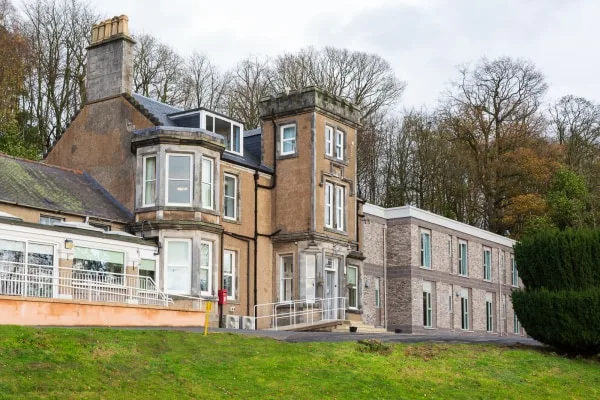



Care Provided by Abbotsford Care Glenrothes
Primary Care Categories
- Older Person Care
- Dementia
- Mental Health Condition
- Physical Disability
- Younger Adults
Length of Stay
- Permanent Care
- Respite Care
Care Types Provided
- Residential Care
- Nursing Care
- Dementia Residential Care
- Dementia Nursing Care
- For a maximum of 40 Service Users
Dementia Care Types
- Mild Dementia
- Moderate Dementia
- Advanced/Complex Dementia
Other Care Provided
- Parkinson's Disease
- Stroke
- Day Care
Facilities
- Own Furniture if required
- Pet Friendly (or by arrangement)
- Close to Local shops
- Near Public Transport
- Minibus or other transport
- Wheelchair Access
- Ground Floor Accommodation only
- Gardens
- Residents Kitchenette
- Phone Point in own room
- Television point in own room
- Residents Internet Access
Funding & Fees
Contact Abbotsford Care Glenrothes to confirm what's included and get a personalised quote
Funding Types Accepted
- Self-Funding (Private)
- Local Authority with Top-up
- Local Authority
Good to Know
Group / Owner
- Abbotsford Care (Glenrothes) Ltd
- Private Owned
Person in charge
- Lucinda Kirk and Shona MacDonald (Managers)
Local Authority / Social Services
Admission Information
- Ages 18+
Care Home Design/Build
- Purpose Built: Yes
- Year Purpose Built: 1993
- Number of floors: 1
Room Information
- Single Rooms (40)
Visiting
- Visitors are welcome at anytime, the team kindly ask that meal times are avoided.
Parking
- Parking available.
Are you the Owner/Manager of Abbotsford Care Glenrothes?View your Advertising Options
Abbotsford Care Glenrothes Reviews (2)
2.4
Abbotsford Care Glenrothes has a Review Score of 2.4 (2.400) out of 10, based on 1 reviews in the last 2 years.
Over all time Abbotsford Care Glenrothes has 2 reviews.
Filter Reviews
Overall Experience
Date Published
Reviewer Connection to Abbotsford Care Glenrothes
Loading...
Review from Pamela H (Granddaughter of Resident) published on 25 February 2025 Submitted via Website•
Overall Experience
My Grandad spent his final months here and his experience was negative. One particular staff member repeatedly accused him of lying about getting food stuck in his throat (an ongoing issue for him) and told him to "stop making excuses" for not wanting to eat his food. This staff member also told...
My Grandad spent his final months here and his experience was negative. One particular staff member repeatedly accused him of lying about getting food stuck in his throat (an ongoing issue for him) and told him to "stop making excuses" for not wanting to eat his food. This staff member also told lies to other family members about things said in casual conversation which has caused a huge rift in the family. During one visit we found his toilet had been blocked for 3 days. He was repeatedly denied medication for a cough "until the nurse signed it off" only to be told by the nurse it had already been signed off. My family member went without eating on several occasions due to the food being not to his taste or too difficult to eat. The staff members were rushed and unable to spend time with residents or fully see to their needs. This left my family member feeling disheartened, forgotten about, particularly when requesting things (e.g. a glass of milk) only for the staff to not return.
↩Reply from Laura Aldous, Operations & Wellbeing Manager at Abbotsford Care Glenrothes
We are truly sorry to hear about your grandad's experience and the distress this has caused your family. Ensuring the wellbeing and dignity of our residents is our highest priority, and it is deeply concerning to learn that we did not meet those standards in this instance. We are always striving...
We are truly sorry to hear about your grandad's experience and the distress this has caused your family. Ensuring the wellbeing and dignity of our residents is our highest priority, and it is deeply concerning to learn that we did not meet those standards in this instance. We are always striving for improvement, and your feedback is incredibly important to us. We would really appreciate the opportunity to speak with you in person to gain a better understanding of your concerns and see how we can learn from this to ensure no one else has a similar experience. Please do get in touch with us at your earliest convenience, and a member of our senior management team will be available to discuss this with you. Once again, we sincerely apologise, and we hope to hear from you soon.
Review from Kerri B (Daughter of Resident) published on 20 June 2016 Submitted via Website•
Overall Experience
We moved my mother, who has Wernicke-Korsakoffs dementia, here after a distressingly poor experience at a different care home. We've never looked back since. The caring, responsive Abbotsford team clearly understand dementia, working hard to enable residents to use their remaining capabilities...
We moved my mother, who has Wernicke-Korsakoffs dementia, here after a distressingly poor experience at a different care home. We've never looked back since. The caring, responsive Abbotsford team clearly understand dementia, working hard to enable residents to use their remaining capabilities whilst skilfully negotiating any difficulties faced. Instead of everyone being sat mindlessly in a TV lounge, since moving in my mum has learned to swim, had her ears pierced, gone to Art and Computing classes at the local College, and has attended countless fetes, parties etc. She is physically - and mentally - more active than ever.
In terms her behavioural difficulties - our previous care home experience was of her being treated like a wilfully naughty child; being sent to her room for "being bad". At Abbotsford they understand that this is part of a disease process, and that sufferers should not be punished - instead they use appropriate distraction techniques that rapidly de-escalate any situation.
Regulatory Rating
Care Inspectorate (CI) Rating
Date: 26 June 2026- How well do we support people's wellbeing?Weak
(2)
- How good is our leadership?Adequate
(3)
- How good is our staff team?Adequate
(3)
- How good is our setting?Adequate
(3)
- How well is care and support planned?Adequate
(3)
Bed Vacancies
Please contact us for latest vacancies.
News (0) & Events (0)
News
There are no news items for Abbotsford Care Glenrothes.
Upcoming Events
There are no upcoming events for Abbotsford Care Glenrothes.
Awards / Recognitions (0)
There are currently no awards/recognitions posted yet for Abbotsford Care Glenrothes.
Accreditations
There are no accreditations posted yet for Abbotsford Care Glenrothes.
Meet the Team (0)
There are no Team Members posted yet.
Frequently Asked Questions about Abbotsford Care Glenrothes
What types of Care is Abbotsford Care Glenrothes registered for?
Older Person Care, Dementia, Mental Health Condition, Physical Disability, Younger Adults are the registered (by the Care Quality Commission) categories of Care.
How many Rooms does Abbotsford Care Glenrothes have?
There are 40 Single Rooms.
What are the Facilities & Services at Abbotsford Care Glenrothes?
Own Furniture if required, Pet Friendly (or by arrangement), Close to Local shops, Near Public Transport, Minibus or other transport, Wheelchair Access, Ground Floor Accommodation only, Gardens, Residents Kitchenette, Phone Point in own room, Television point in own room, Residents Internet Access are some of the Facilities & Services.
How far is Abbotsford Care Glenrothes to the centre of Glenrothes?
1.4 mile(s) as the crow flies, distance by road may be significantly further.
Information on this page is displayed without responsibility for its accuracy on the part of carehome.co.uk. Please contact Abbotsford Care Glenrothes to verify any information. View our terms and conditions. Abbotsford Care Glenrothes has a Basic Service -what a Basic Service includes.