International Nurses Week: Care Rooted in Compassion


Nursing is often spoken about as one profession, but the day-to-day reality can look very different depending on where a nurse works, who they support and the kind of care being given. While some nurses work in fast-paced hospital environments focused mainly on treatment and recovery, nursing within social care can offer more opportunity to build long-term relationships and support people not just physically, but emotionally and socially too.
As part of International Nurses Week, we spoke to Lucy Hernaman, a social care nurse at Heanton Nursing Home in North Devon. Reflecting on her experiences supporting people living with dementia and complex needs, Lucy shared how working in social care changed her understanding of compassionate nursing and the importance of truly knowing the people you care for.
Putting an End to Institutionalised Care
Lucy spoke about the differences she had seen between social care nursing and more traditional healthcare settings. She shared that she wished more nurses had the opportunity to experience placements within care homes like Heanton during their training.
“What an education it would be, that they could take forwards into their careers with them. I know I wish I had been offered a placement like Heanton when I trained 15 years ago. I did have a caring background, but it was in a home located locally to me that was very institutionalised. Heanton is about as far from institutionalised as it could possibly be.”
The Importance of Meeting Emotional and Social Needs in Dementia Care
Lucy joined Heanton Nursing Home in 2021 and has now worked within the home for over five years. Lucy spoke about the importance of understanding the emotional and social needs behind a person’s behaviour, rather than only responding to the behaviour itself.
“When I first started at Heanton I had very little Dementia knowledge. I had worked in a home which had dementia floors, but I had not been taught to really stop and consider the person. This is why the right education is so important in social care.
As a nurse at Heanton, I have been given so much more time to observe people and their behaviours. I soon found here that a person behaved a certain way for so many reasons, and that it was important to identify those reasons as people often don’t have the capacity to tell us themselves. This in turn has led to our residents, who we call family members, being able to live fulfilling lives without judgement or ridicule. “
Breaking the Mould of Social Care
Lucy also spoke about the importance of flexibility and individuality within social care, and how this differed from some other settings she had previously worked in. “In some homes I had worked in, people were expected to fall into the home’s schedule,” she said. “At Heanton, family members are supported to live their lives as they wish. There is no strict routine here and people aren’t made to fit into a mould.”
Lucy explained that Heantons willingness to challenge more traditional approaches to care was something that stood out to her. “Not everyone fits into the normal care home narrative,” she said. “If the team have a reason for going against the grain and can show why and how, then with the right risk assessments, Heanton will support it.”
Care without Sedation
Lucy also spoke about Heantons approach to supporting people living with Dementia without defaulting to sedation or restrictive practices. She explained that, in her experience, some people can quickly be labelled as “difficult” or “aggressive” within healthcare settings without enough understanding of the reasons behind their distress or behaviour.
“I love Heanton’s stance towards medication and that it is always used as a last resort,” she said. “Our ethos is to understand why an expression of behaviour has happened and try to minimise the chances of it escalating, rather than only reacting once it already has.” Lucy described the importance of teams having the time to truly know the people they support, recognising early signs of distress and responding in ways that help avoid situations escalating further. “Far more work and skill goes into meeting a person’s needs than simply managing the after-effects of an incident,”
A Human Approach to Care
“The thing I most love about my job is that I am allowed to love the family members as if they were my own family,” she said. “Every job I have ever had has always called those we look after ‘residents’, ‘service users’ or ‘patients. Such impersonal titles. It’s also often seen as taboo to hug or show affection and to ‘keep it professional’, but sometimes that human connection is what makes a person’s day. The people we look after are our equals and this is how we should care for them.”
Lucy explained that what stood out most to her about Heanton’s approach was its focus on emotional understanding and connection, not simply physical care needs alone. “Every day I go home feeling as though my job and my life has been worth it because I have made someone feel loved and cared for, not just on a social care level, but on a psychological and emotional level.”
To learn more about working with Heanton Nursing Home, or to begin your own journey in care, please visit Devon Nursing Home – Join our Team – Heanton Nursing Home
click here for more details or to contact Heanton Nursing Home
Latest Care Provider & Regulatory News
 24-Sep-28
Night out
24-Sep-28
Night out
 13-May-26
International Nurses Week: Care Rooted in Compassion
13-May-26
International Nurses Week: Care Rooted in Compassion
 13-May-26
Employee of the Month - April
13-May-26
Employee of the Month - April
 13-May-26
Celebrating NAPA Intergenerational Week at Henford!
13-May-26
Celebrating NAPA Intergenerational Week at Henford!
 13-May-26
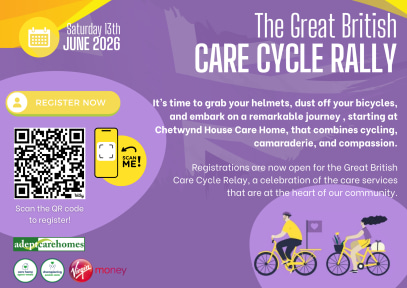
Chetwynd House Hosts The Great British Care Cycle 2026
13-May-26
Chetwynd House Hosts The Great British Care Cycle 2026