
I can't recommend this home enough.John V(Son of Resident/Service User)


She is being cared for and was made very welcomeWalter J K(Husband of Resident/Service User)

I can't recommend this home enough.John V(Son of Resident/Service User)


She is being cared for and was made very welcomeWalter J K(Husband of Resident/Service User)

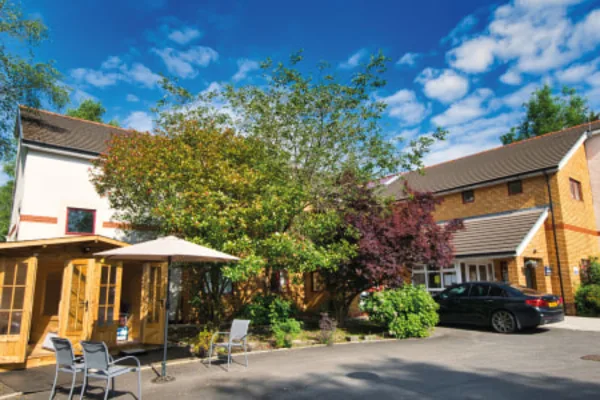
Ty Gwynno Care Home offers residential, nursing, dementia and palliative care to up to 46 older people in Pontypridd.
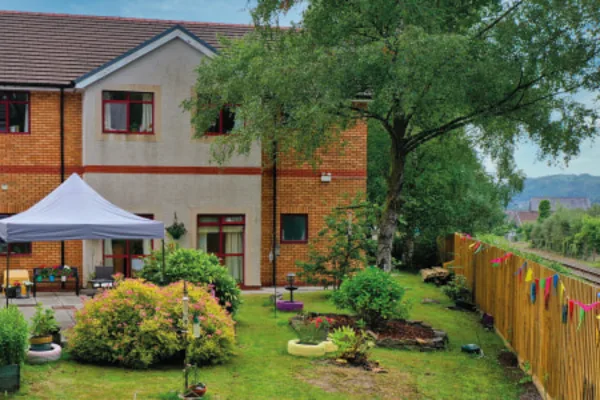
The home is just outside the town centre, with a bus route into the high street where residents can enjoy shops and amenities. It is also half an hour’s drive from Cardiff. The home is in a quiet residential area with stunning views over the surrounding countryside.
Ty Gwynno Care Home is cheerfully...
Care Provided by Ty Gwynno Care Home
Primary Care Categories
- Older Person Care
- Dementia
- Learning Disability / Autism
- Mental Health Condition
- Physical Disability
- Visual / Hearing Impairment
- Eating Disorders
- Alcohol / Drug Misuse
Length of Stay
- Permanent Care
- Respite Care
Care Types Provided
- Residential Care
- Nursing Care
- Dementia Residential Care
- Dementia Nursing Care
- For a maximum of 46 Service Users
Dementia Care TypesMild Dementia
Someone living with our definition of "mild dementia" might experience some or all of the following:
- Memory problems such as misplacing items and not be able to recall recent events (however, in some forms of dementia a person's memory may be unchanged)
- Difficulties thinking through problems and planning, making decisions
- Language and communication issues such as finding it difficult to recall the appropriate word in a conversation or following a conversation
- Poor orientation, getting lost in areas previously familiar to them
- Difficulty judging distances (more falls than usual)
- Changes in their normal mood including anxiety and depression
- In certain types of dementia, personality and behaviour changes may be present alongside or instead of issues with memory or concentration.
Moderate Dementia
Someone living with our definition of "moderate dementia" might experience some or all of the following:
- Worsened memory problems. Not always recognising own family members and friends. Repeating the same questions over and over again
- Worsened language and communication issues, forgetting what they are saying mid-sentence. Not being able to understand what someone else is saying
- More frequent confusion, e.g. about the time of day or where they are, including their own home
- Apathy, depression and anxiety
- Believing things that aren't true (paranoia)
- Frequent hallucinations
- Lack of emotional control, quick to anger, fearfulness, sadness
- Loss of inhibition
- Difficulties sleeping or waking during the night and behaving as though it is daytime - loss of circadian rhythm.
Advanced Dementia
Someone living with our definition of "severe dementia" might experience some or all of the following:
- Severe memory problems. Not recognising family members and friends. Not being able to recall their own name
- Severe language and communication issues, not being able to understand what someone else is saying
- Severe confusion, e.g. about the time of day or where they are, including their own home
- Apathy, depression and anxiety
- Believing things that aren't true (paranoia)
- Frequent hallucinations
- Lack of emotional control, quick to anger, fearfulness, sadness
- Loss of inhibition
- Difficulties sleeping or waking during the night and behaving as though it is daytime - loss of circadian rhythm.
Verbally or physically aggressive behaviour
If your loved one displays this type of behaviour you may need a care home that has specially trained staff. Verbal/physical aggression is often defined:
- Consistent shouting and screaming
- Verbal abuse
- Physical abuse
How we define Dementia Care Types
Mild Dementia
Someone living with our definition of "mild dementia" might experience some or all of the following:
- Memory problems such as misplacing items and not be able to recall recent events (however, in some forms of dementia a person's memory may be unchanged)
- Difficulties thinking through problems and planning, making decisions
- Language and communication issues such as finding it difficult to recall the appropriate word in a conversation or following a conversation
- Poor orientation, getting lost in areas previously familiar to them
- Difficulty judging distances (more falls than usual)
- Changes in their normal mood including anxiety and depression
- In certain types of dementia, personality and behaviour changes may be present alongside or instead of issues with memory or concentration.
Moderate Dementia
Someone living with our definition of "moderate dementia" might experience some or all of the following:
- Worsened memory problems. Not always recognising own family members and friends. Repeating the same questions over and over again
- Worsened language and communication issues, forgetting what they are saying mid-sentence. Not being able to understand what someone else is saying
- More frequent confusion, e.g. about the time of day or where they are, including their own home
- Apathy, depression and anxiety
- Believing things that aren't true (paranoia)
- Frequent hallucinations
- Lack of emotional control, quick to anger, fearfulness, sadness
- Loss of inhibition
- Difficulties sleeping or waking during the night and behaving as though it is daytime - loss of circadian rhythm.
Advanced Dementia
Someone living with our definition of "severe dementia" might experience some or all of the following:
- Severe memory problems. Not recognising family members and friends. Not being able to recall their own name
- Severe language and communication issues, not being able to understand what someone else is saying
- Severe confusion, e.g. about the time of day or where they are, including their own home
- Apathy, depression and anxiety
- Believing things that aren't true (paranoia)
- Frequent hallucinations
- Lack of emotional control, quick to anger, fearfulness, sadness
- Loss of inhibition
- Difficulties sleeping or waking during the night and behaving as though it is daytime - loss of circadian rhythm.
Verbally or physically aggressive behaviour
If your loved one displays this type of behaviour you may need a care home that has specially trained staff. Verbal/physical aggression is often defined:
- Consistent shouting and screaming
- Verbal abuse
- Physical abuse
How we define Dementia Care Types
- Mild Dementia
- Moderate Dementia
- Advanced/Complex Dementia
Other Care Provided
- Parkinson's Disease
- Stroke
- Palliative / End of Life Care
- COPD/Pulmonary Disease
- Bariatric Care/Obesity
- Convalescent Care
- Acquired Brain Injury (ABI)
Accreditations
- Adopt A Grandparent

Facilities
- Own Furniture if required
- Pet Friendly (or by arrangement)
- Close to Local shops
- Near Public Transport
- Minibus or other transport
- Lift
- Wheelchair Access
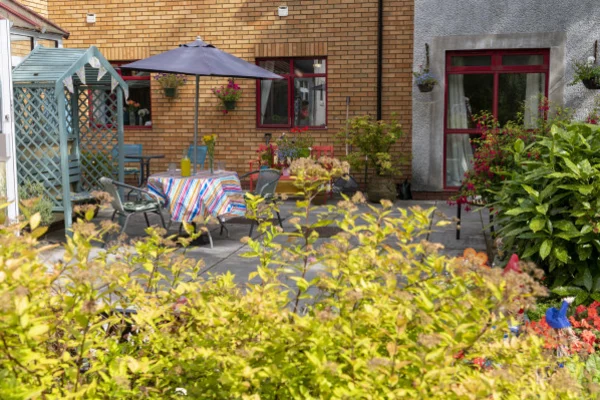
- Gardens
- Bar/Café
- Television point in own room
- Residents Internet Access
Funding & Fees
Weekly Charges per Person
Final fees are subject to assessment of the potential resident, the size of the room offered and the facilities needed / available.
Additional services such as hairdressing, chiropody, newspapers and excursions are not included in the standard weekly fees.
The price(s) shown are provided by the care home. Contact Ty Gwynno Care Home for full pricing details and T&Cs.
Contact Ty Gwynno Care Home to confirm what's included and get a personalised quote:
Funding Types Accepted
- Self-Funding (Private)
- Local Authority with Top-up
- Local Authority
- NHS Continuing Healthcare (CHC)
Support you may be entitled to
- If you choose a care home based in Wales, you may be eligible for the Welsh NHS-funded nursing care contribution of at least £201.74 per week. This support is not reflected in the fee amount shown, and the actual contribution may be higher depending on the Local Health Board.
Good to Know
Group / Owner
- Harbour Healthcare Ltd
- Private Owned
Person in charge
- Rebecca Harkus (Registered Home Manager)
Local Authority / Social Services
Admission Information
- Ages 60+
Care Home Design/Build
- Purpose Built: Yes
- Year Purpose Built: -1
- Last Refurbishment: 2024
- Number of floors: 2
Room Information
- Single Rooms (46)
Visiting
- Contact with relatives and friends is fundamental to their resident’s health and well-being and visits are encouraged. There are no restrictions or booking requirements to visit Ty Gwynno Care Home; however they ask to not visit during ‘protected mealtimes’ unless is a part of the essential caregiver role.
Parking
- Ty Gwynno Care Home has a private car park with disabled parking bays, for people visiting the Home. There is no charge to use the cark park. There is also space to park on the adjacent roads.
Ty Gwynno Care Home Reviews (141)
Ty Gwynno Care Home has a Review Score of 10 (9.967) out of 10, based on 41 reviews in the last 2 years.
Over all time Ty Gwynno Care Home has 141 reviews.
My wife moved from hospital to this lovely home and settled in and is very happy here. She is being cared for and was made very welcome bt everyone on the staff.
Bed Vacancies
Please contact us for latest vacancies.
News (0) & Events (0)
There are no news items for Ty Gwynno Care Home.
There are no upcoming events for Ty Gwynno Care Home.
Awards / Recognitions (7)
- 30 Jan 2026Recipient: Ty Gwynno Care Home
- 31 Jan 2025Recipient: Ty Gwynno Care Home
- 30 Jun 2021Recipient: Harbour Healthcare Ltd
Meet the Team (5)

Hi, my name is Rebecca. I am the Home Manager at Ty Gwynno Care Home.
I was born in Pontypridd and here I have remained and settled. I am a proud welsh lady and am fluent in the Welsh language.
I qualified as a Registered Nurse in 2000 I have worked my way up through the following roles of General Registered Nurse to Unit Lead, Clinical Lead, and Deputy Manager, to my most recent post as the Home Manager of Ty Gwynno Care Home.

Hi, my name is Louise. I am the Deputy Home Manager at Ty Gwynno Care Home.
I am passionate about providing the best care possible to our residents and to supporting their families.
I'm always happy to help if you have any questions!

Hello, my name is Catherine. I am the Unit Manager for the EMI/General Residential Unit here at Ty Gwynno Care Home.
I have worked here for over 21 years, the last 8 years as Unit Manager. I love my job.
I find it rewarding and enjoy helping and supporting both people living with Dementia and their families.

Hi, my name is Abby. I am the Administrator at Ty Gwynno Care Home.
I have worked at Ty Gwynno Care Home for the past 18 months. I was initially employed as a care assistant & an Administration Assistant, before stepping up to the Administrator role.
I enjoy socialising with the families and being at the front of the home with a smile on my face. I enjoy my job and being part of the team.

Hello, my name is Ceri. I am the Activities Co-Ordinator at Ty Gwynno Care Home.
I am from Pontypridd. I have worked at Ty Gwynno Care Home since 2013.
I really enjoy my job – planning and providing activities for our Residents and working alongside a fantastic team that supports me in my role.
Every day is a different day, and we always have so much fun. Laughter is our medicine!
Information on this page is displayed without responsibility for its accuracy on the part of carehome.co.uk. Please contact Ty Gwynno Care Home to verify any information. View our terms and conditions. Ty Gwynno Care Home has an Enhanced Service -more info.